Quick summary
- Legend has Poseidon severing the tip of Corfu to make a retreat for Amphitrite, and the guides tell it aboard.
- The island reads as a solid green mass from the water, which is centuries of olive cultivation.
- The same soft rock that grows the olives is what the sea has cut into arches and caverns.
- Corfu and Paxos were Venetian for four centuries, and the olive groves date from that rule.
The legend the guides tell
Poseidon, wanting a quiet retreat for Amphitrite, struck the southern tip off Corfu with his trident and let it drift away to become Paxos. The tour tells this story in its own description, which is how you know it will be told on the boat.
Amphitrite was a sea goddess and Poseidon's wife, and in most versions of the story she was reluctant about the marriage. An island made specifically as somewhere she might want to be is a fairly transparent piece of mythological courtship.
It is a good story to hear as Paxos rises ahead of the boat, which is exactly when a guide will tell it. A legend read in advance is trivia; a legend told with the island in view is something else. The timing is deliberate on the part of the guides, and it works every time.
Paxos caves Corfu: what actually made it
Limestone and tectonics, over rather longer than an afternoon's work with a trident. The Ionian islands sit where the African plate is grinding under the Eurasian one, which has been lifting and folding this seabed for millions of years.
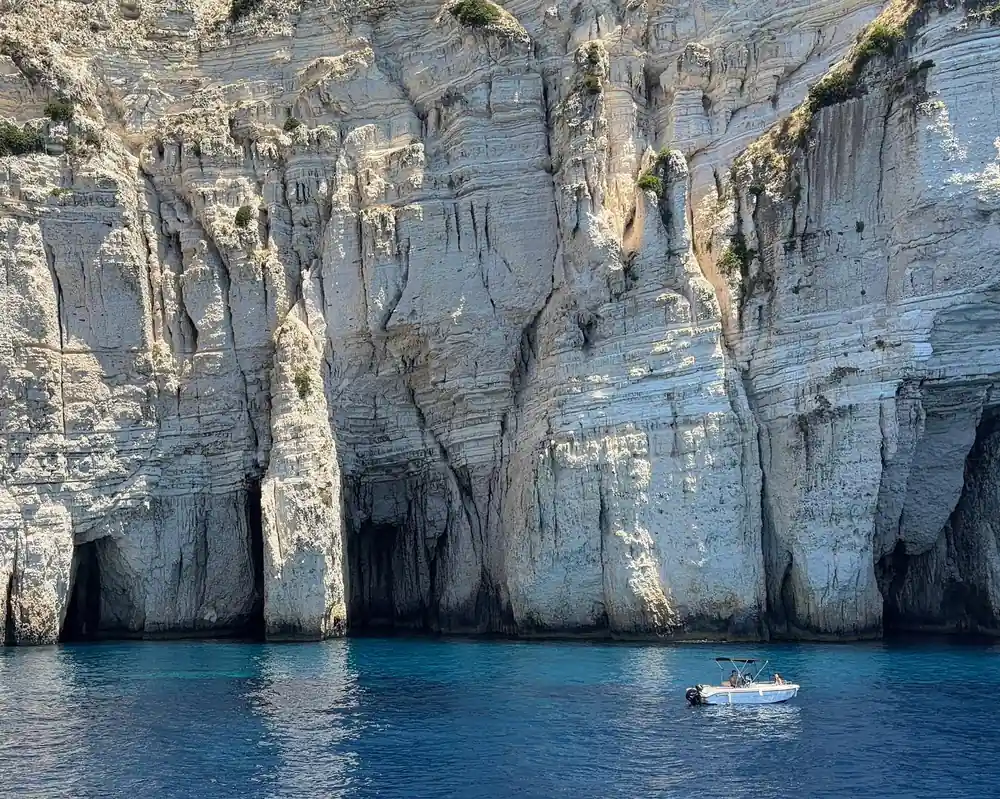
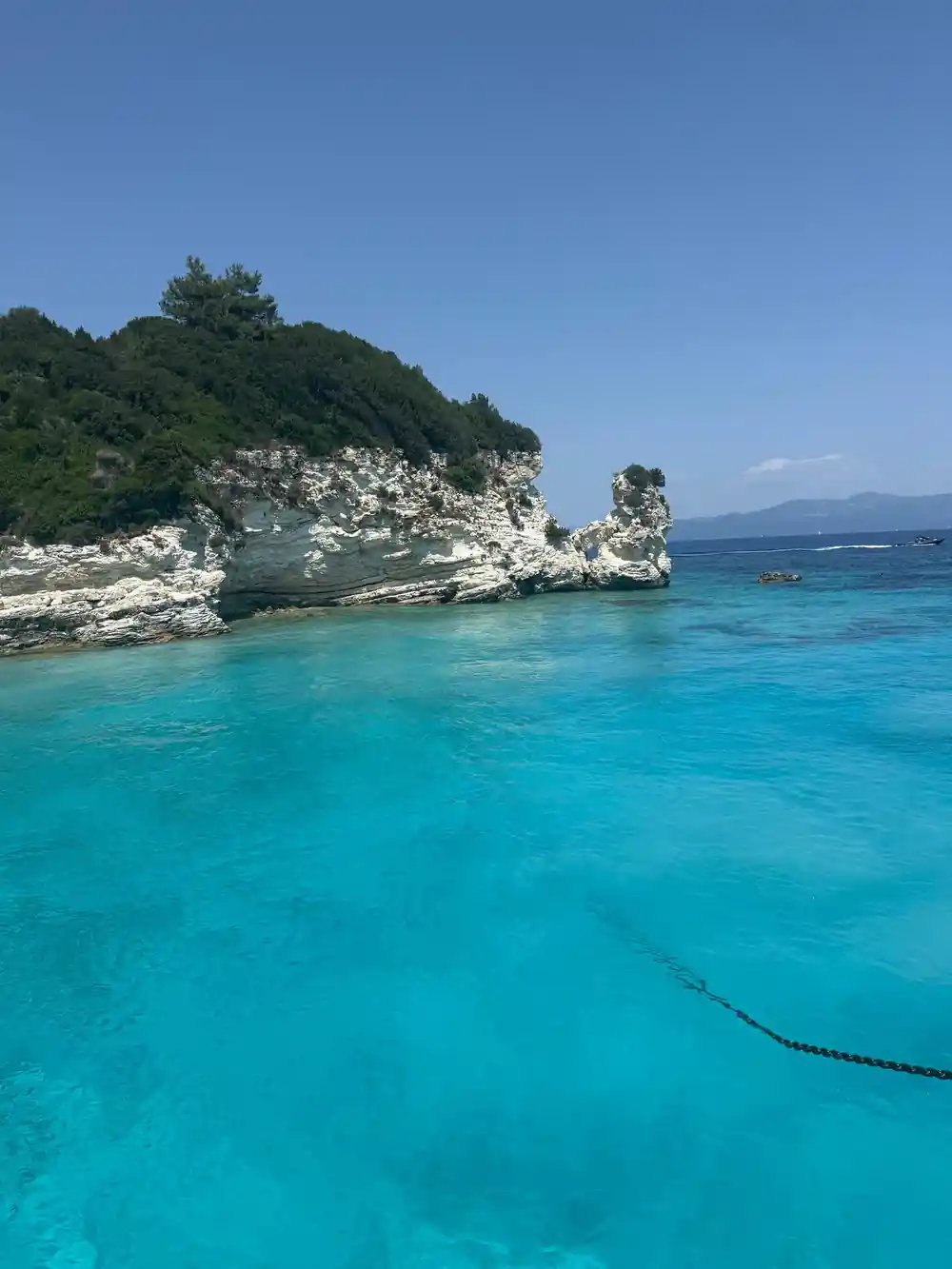
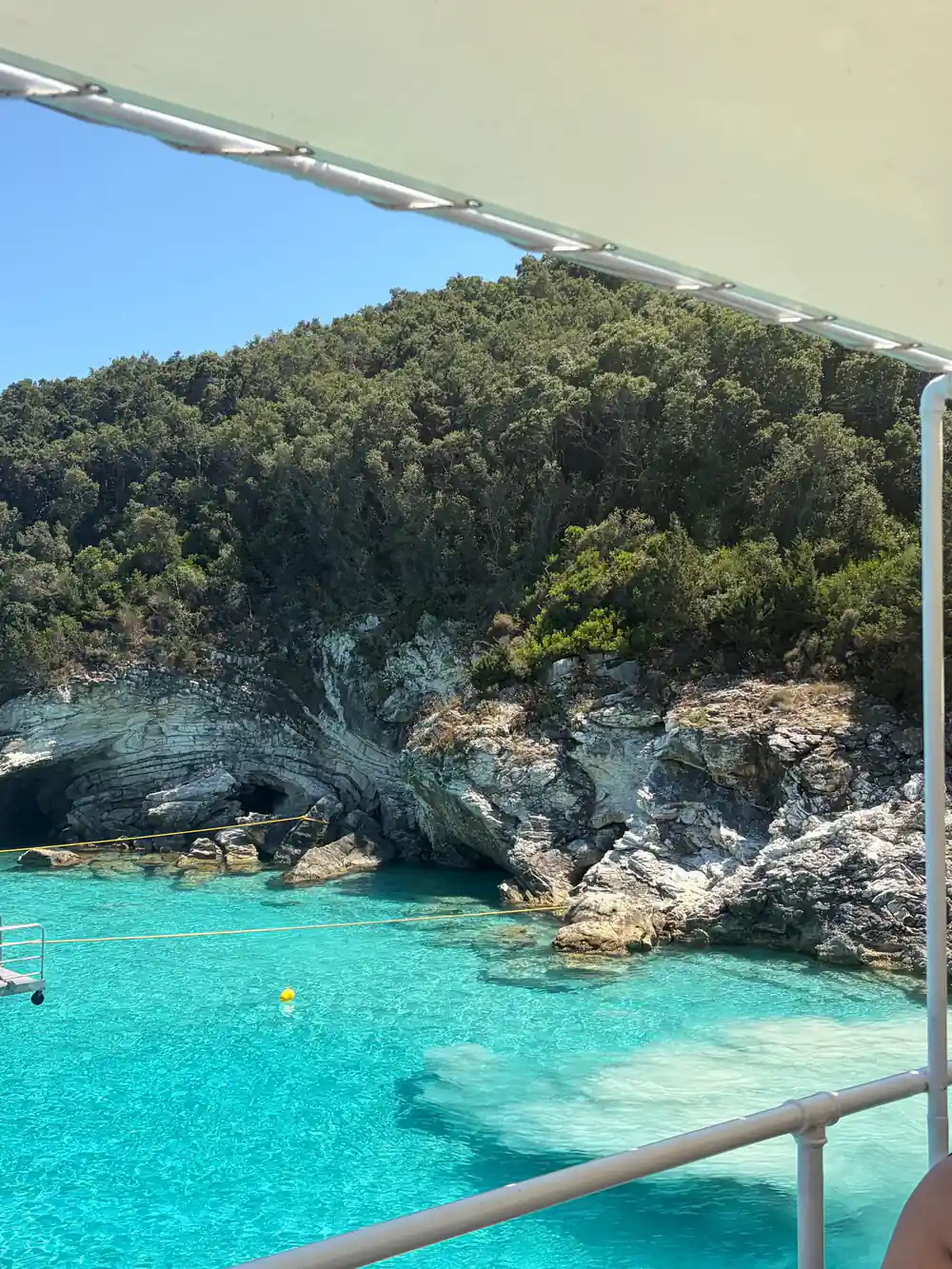
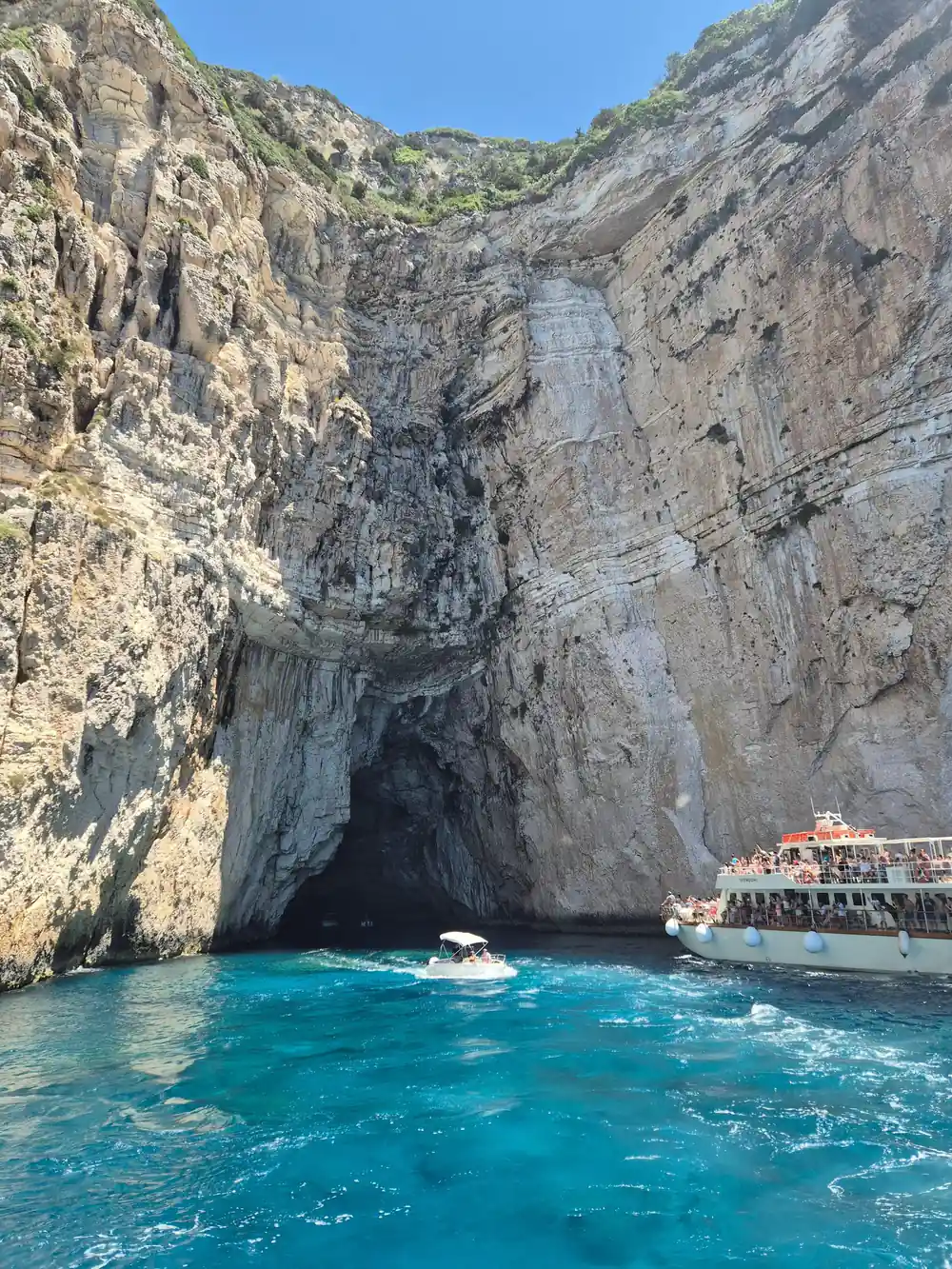
What surfaced here was limestone, laid down as marine sediment and then raised. That single fact explains almost everything about the trip: the pale cliffs, the caves cut into them, the white seabed that makes the water turquoise, and the soil that grows the olives.
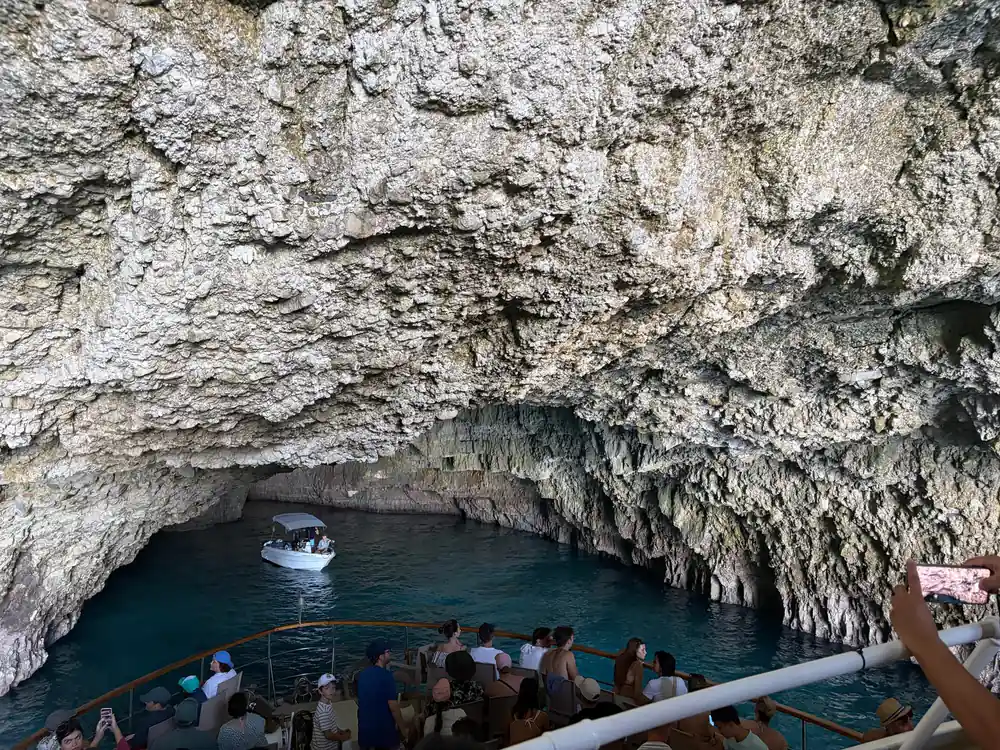
The caves themselves are the sea taking the softest routes through that rock. Where a fault or a soft band met the open western swell, the water found it and worked, which is why the caves are concentrated on the exposed side.
The olive and cypress cover of Paxos seen from the water on the approach
The olive groves
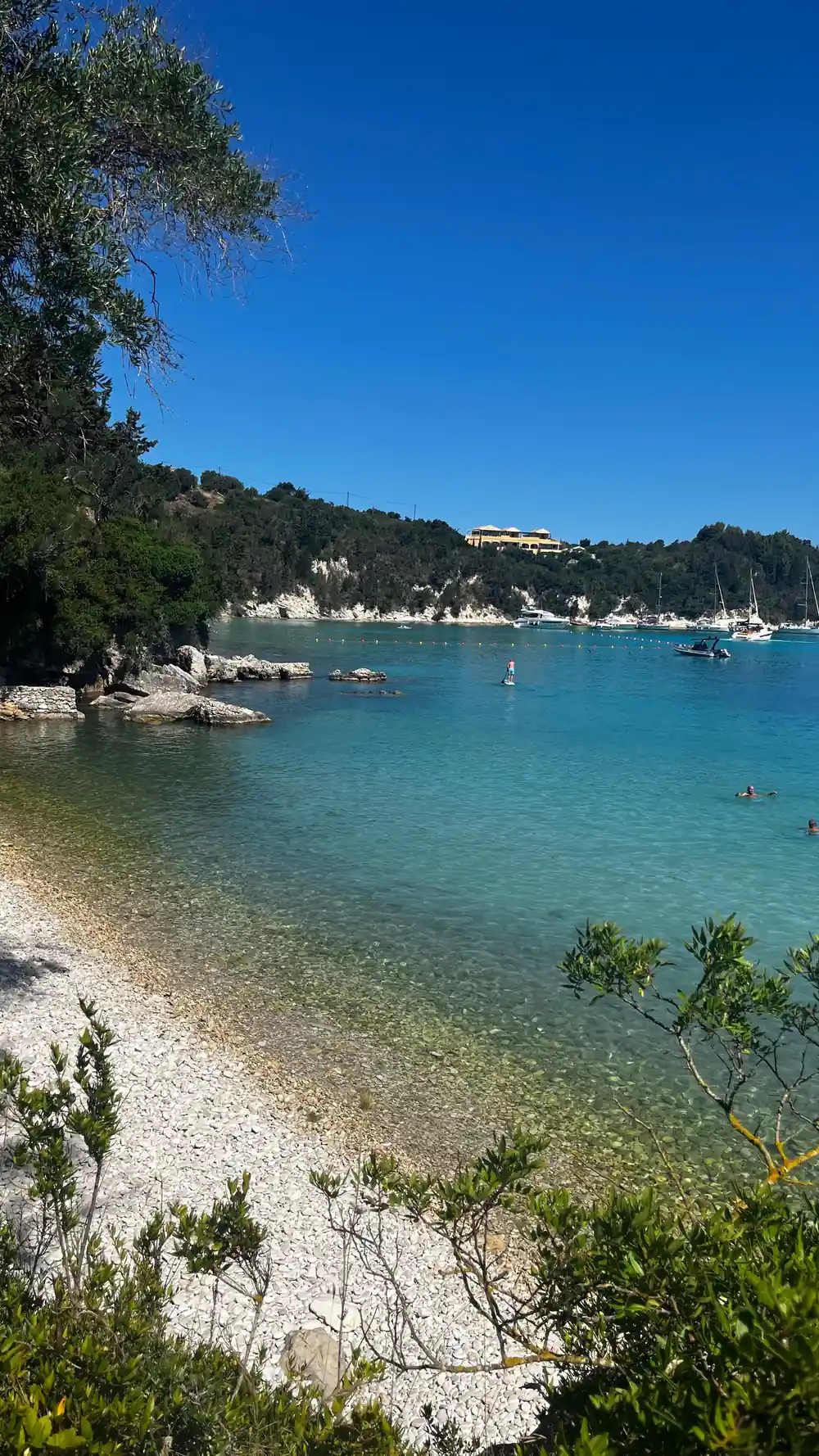
The tour description notes the olive and cypress trees covering Paxos, and it is not decorative language. From the water the island genuinely reads as one continuous green mass with very little bare ground.
That is agriculture rather than wilderness. Paxos has been an olive island for centuries and its groves are old, with trees whose trunks have gone hollow and split with age and are still producing.
The Venetians are usually credited with the scale of it. Venice ruled Corfu and Paxos for around four hundred years and encouraged olive planting on an industrial scale, which is why these islands are green in a way that much of Greece is not.
Paxos Erimitis beach and the white cliffs
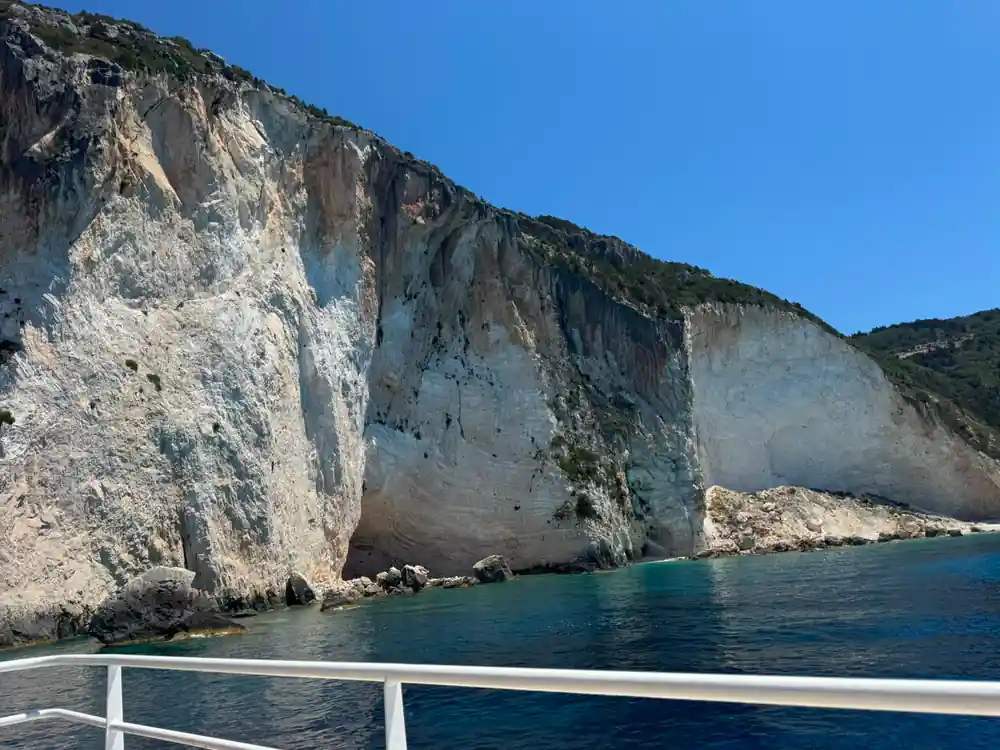
Erimitis is on the western side, and it is the name the tour attaches to the white cliffs in its highlights. The cliff face there is one of the most photographed things in the Ionian.
The rock is pale to the point of glare in full sun, and it drops directly into deep water. Below it are the caves, the arches and the collapsed sections that the boat runs along.
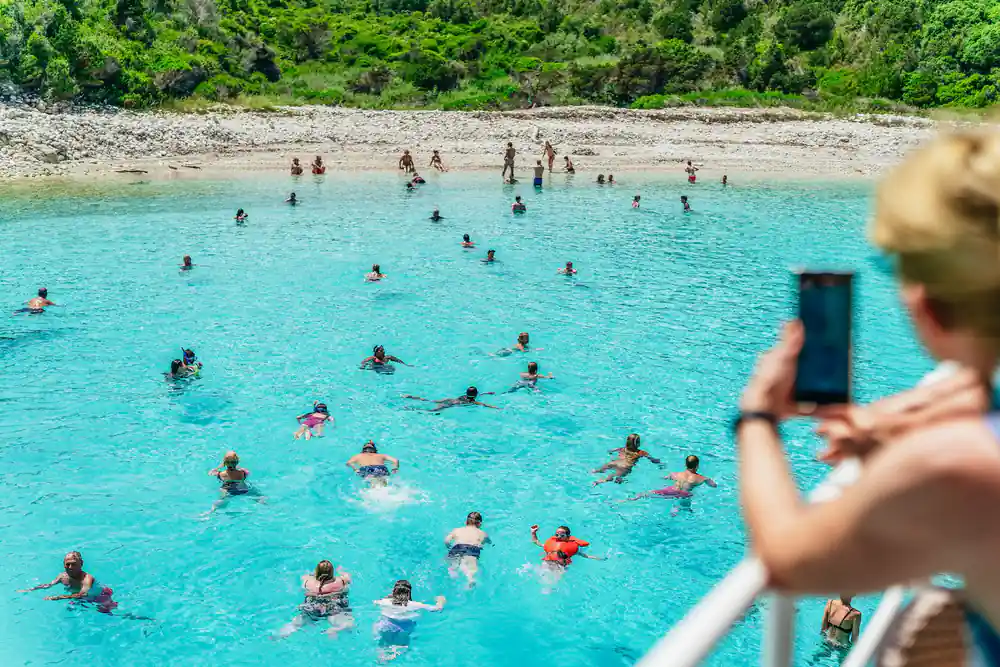
There is a beach at Erimitis reached from the land, which is a separate proposition from the day cruise. From the water, what you get is the wall itself, which is the better half of the deal.
2
Islands with one origin story between them. Paxos was struck off Corfu, and Antipaxos was said to be struck off Paxos in the same blow.
Antipaxos and the second blow
Some versions of the story have Antipaxos struck off in the same moment, a smaller fragment carried a little further. Others treat it as a separate island entirely.
Geologically they are the same rock and the same event, which is why the water off Antipaxos does the same thing that the water in the caves does. Both are pale limestone under clear sea.
The islands are different in every other respect. Paxos has villages, roads and a working population. Antipaxos has vineyards, a handful of residents and the beaches that boats come for.
Paxos kipiadi beach and the rest of the island
This trip sees the north and the west of Paxos, which leaves a good deal of the island unvisited. Kipiadi, Marmari and the other eastern beaches are reached from Gaios or by road and do not feature on a day cruise.
That is worth knowing rather than regretting. A day trip from Corfu covers the caves, one village and a swim stop, which is a full day and not the whole island.
People who fall for Paxos on this trip frequently come back and stay, which is the honest recommendation. There are ferries from Corfu and the island holds a week comfortably.
Why the story survives
Because it explains something a Greek islander could see. Paxos sits close to Corfu, is made of the same rock, and looks like a piece that came away. A trident is as good an account of that as anything available before geology.
Greek myth is full of this kind of explanation, and the good ones are the ones tied to a landscape you can point at. This is one of them, which is why it is still being told on boats two and a half thousand years later.
And it does what a legend should do on a day like this. It gives the island a shape in your head before you arrive, and it makes a green mass on the horizon into somewhere with a reason to exist.
Hear it told as you arrive
from US$49Reserve now & pay later