Quick summary
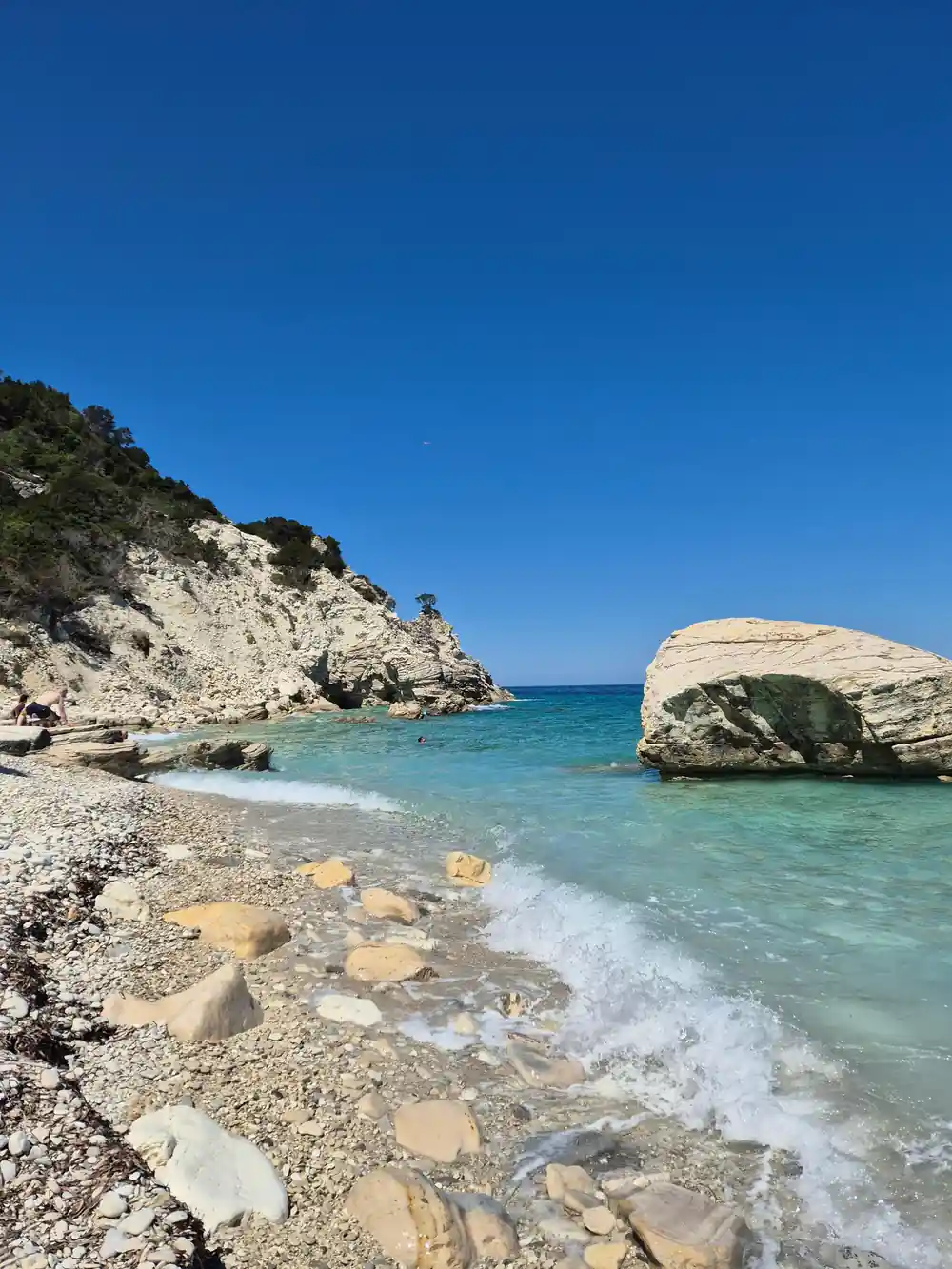
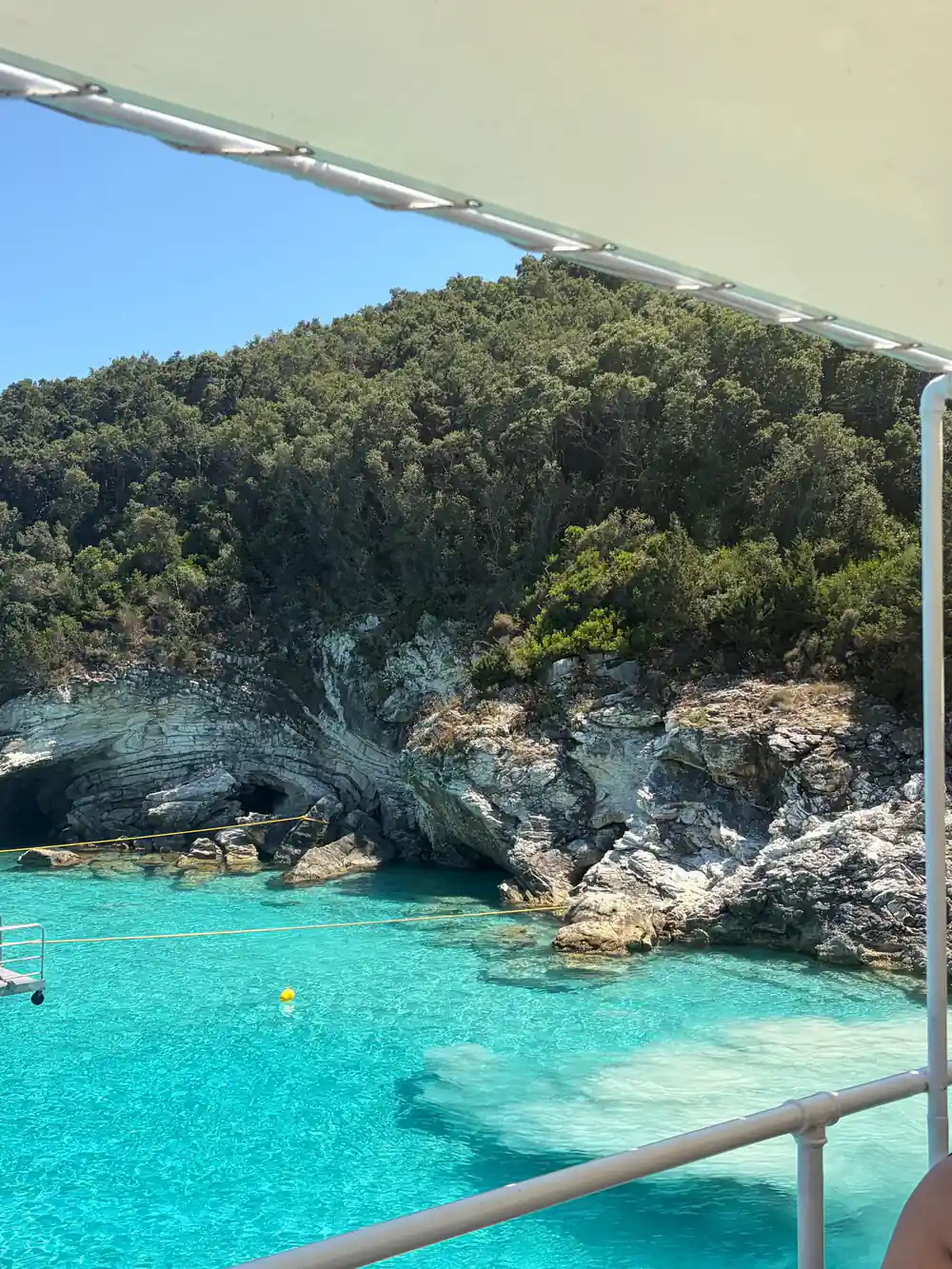
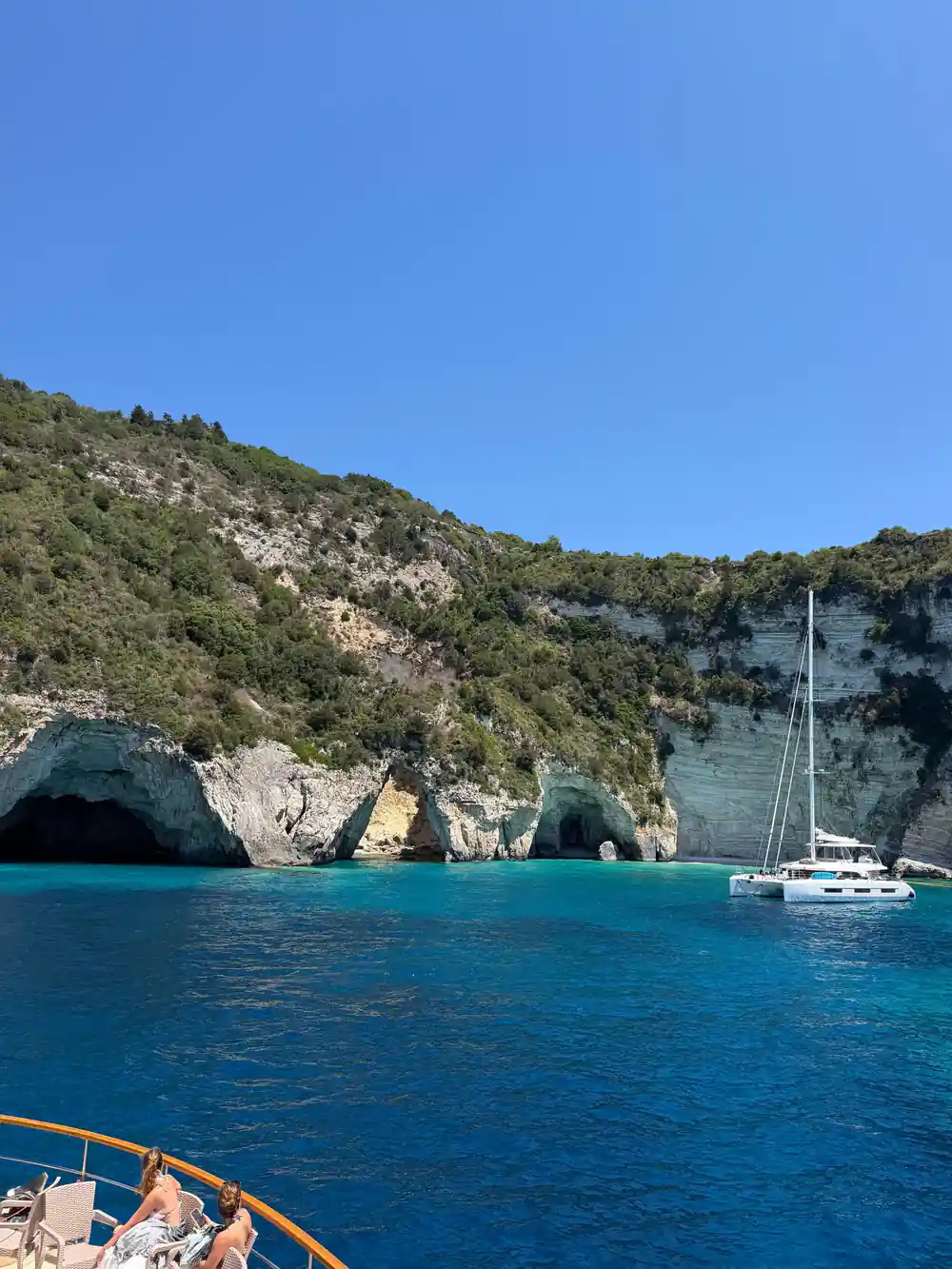
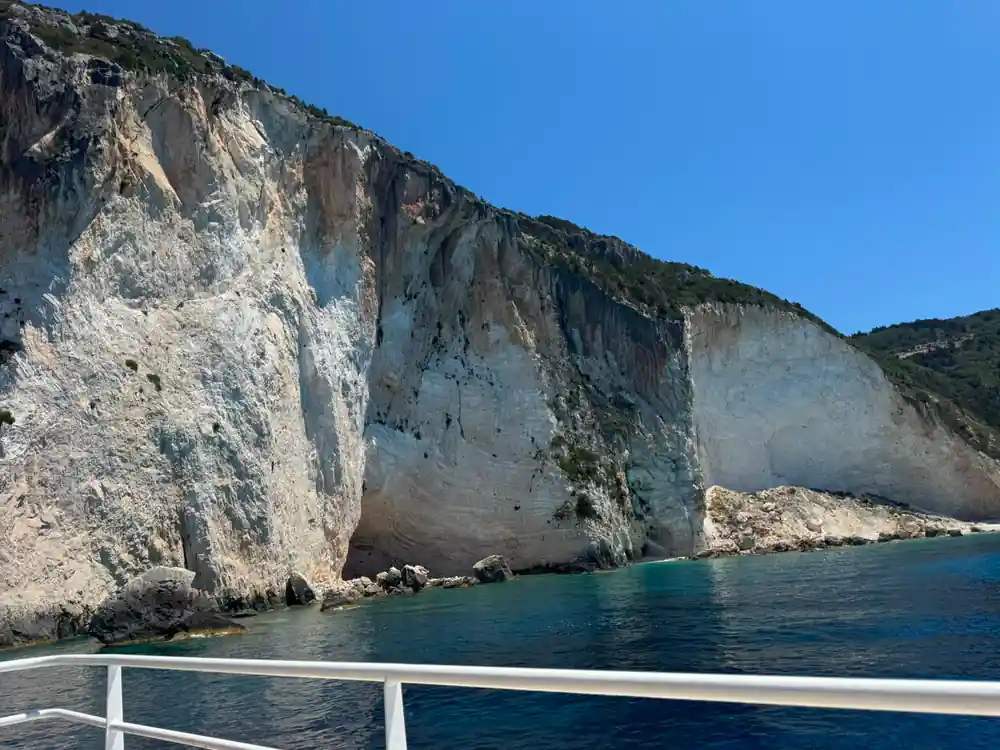
- The exposed western side of Paxos is a wall of white limestone undercut by the sea into caves and arches.
- At the larger openings the vessel runs inside, which is the moment everybody aboard reaches for a camera.
- Sunlight bounces off the pale seabed outside and back through the opening, so the water inside glows blue.
- The tour names them, and Mediterranean monk seals are among the rarest seals anywhere in the world.
What the caves are
Paxos is limestone, and its western side faces the open Ionian with nothing between it and Italy. Several thousand years of that sea working at soft rock has produced what you sail along: a wall of white cliff undercut into caves, arches, stacks and fissures.
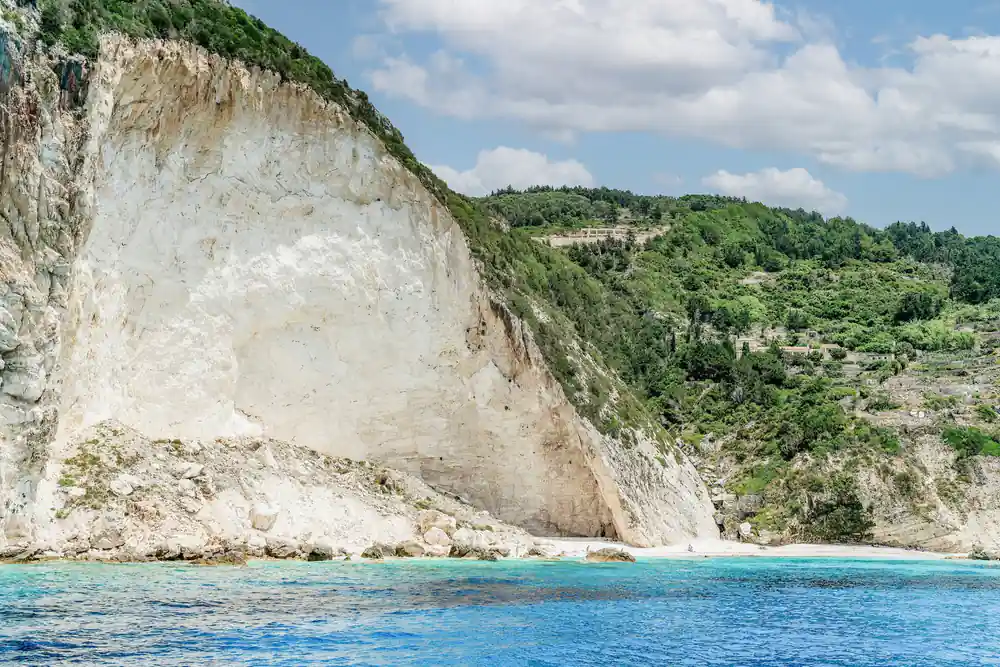
The caves are not one attraction but a series along the coast, ranging from shallow overhangs to openings a boat can pass into. The tour highlights them alongside the white cliffs of Erimitis, which is the most dramatic stretch of the wall.
Seen from a boat at the base, the scale takes a moment to register. There are photographs from this coast where the cruise vessel looks like a toy against the rock, and they are not exaggerating anything.
Paxos antipaxos blue caves cruise: why the water glows
It is not dye, algae or a filter. Sunlight enters the water outside the cave, reflects off a pale limestone seabed, and travels back up and through the opening into the cave's interior.
Water absorbs the red end of the spectrum first, so what survives that journey is overwhelmingly blue. Inside a cave with no direct light of its own, that reflected blue is the only illumination, and it is startling.
The effect depends on sun and sea state. A bright still day gives you the full electric version. Cloud or chop scatters the light and produces something more muted, which is a genuine reason to hope for good weather beyond the obvious ones.
What the boat actually does
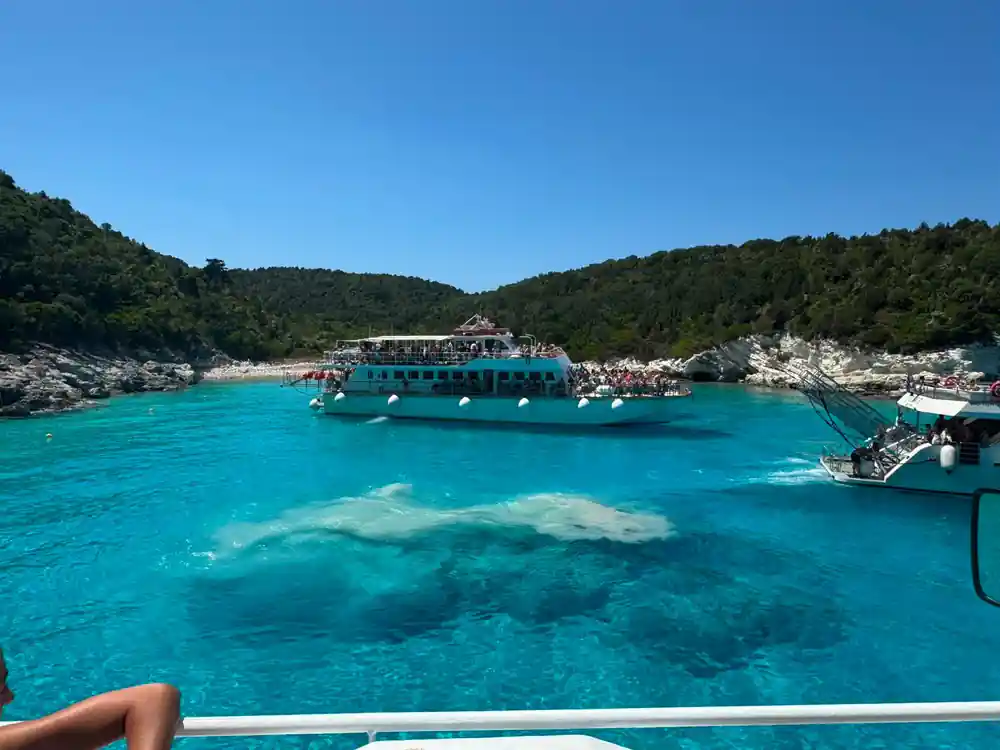
Runs along the coast close in, and enters the openings large enough to take it safely. Photographs from this operator show the vessel well inside cave mouths with passengers on the bow, and passengers on deck with the cliff directly overhead.
That is more than most operators on this coast manage, because it depends on the size and handling of the boat and on the skipper knowing the water. It is also why the guides are narrating: they know which opening is which.
Whether every cave is entered on any given day depends on the sea. On a swell the skipper stays out, which is the correct decision and worth accepting without complaint from a passenger perspective.
The cruise boat entering a cave mouth in the white limestone of western Paxos
Cruise to Paxos Antipaxos and Blue Caves: what to see
Look up as much as out. The most striking thing about the cave interiors is the rock overhead, layered and fluted and stained orange where iron has run through it, above water that is doing something the rock is not.
Watch the waterline. The undercut is where the sea has been working hardest and it produces the arches, the collapsed roofs and the stacks standing offshore. It is a masterclass in coastal erosion happening at a speed you can see the results of.
And look for the seals. Mediterranean monk seals haul out in caves like these, which is precisely why they survive here at all. There are perhaps a few hundred left in the world and a fair number of them live in the Ionian.
Photographing them
Hard, and worth attempting anyway. The dynamic range between a sunlit cliff outside and a cave interior lit only by reflected blue is more than most cameras handle, so something is going to be blown out or black.
The trick is to expose for the water rather than the rock. A silhouetted cave mouth with glowing water below it is the photograph people actually want, and it is the one you get by ignoring the instinct to brighten the shadows.
Take one and then stop. Guests who describe this trip best are frequently the ones who say they put the phone away, and one specifically advises going without looking up photographs first so that the caves land properly.
What are the Blue Caves in Corfu
A reasonable question with a slightly awkward answer: the famous ones are on Paxos rather than on Corfu itself, which is why the day trip exists. People searching from a Corfu hotel are usually looking for exactly this cruise.
Corfu has sea caves of its own on its west coast, and there are boat trips to them from resorts on that side of the island. They are a different and smaller proposition.
The Paxos caves are the ones with the reputation, and reaching them means a crossing of some hours from Corfu. That crossing is the reason the day is structured the way it is.
When the caves are at their best
Midday and early afternoon, when the sun is high enough to be driving light down through the water rather than skimming across it. That is broadly when the cruise reaches this coast, which is not a coincidence.
Flat calm helps enormously. Both because the boat can enter more of the openings and because a still surface reflects and refracts cleanly rather than scattering everything.
High summer therefore gives you the best odds, which is also when the Ionian is most reliably settled. Guests who sailed in shoulder season describe the caves as still worth it, with a note that the sea decided how close they got.
Book a cruise into the caves
from US$49Reserve now & pay later